
外部展示
外部展示
01
梅轩尹奉吉义士铜像

为纪念上海义举61周年,于1993年4月29日落成于“梅轩市民之林”内。尹奉吉义士为了国家独立、人类和平与平等自由,在24岁的年轻岁月中壮烈殉国。铜像底座右侧刻有其在义举前夕(4月26日)完成虹口公园下见后写下的绝笔诗;左侧刻有“斯恩寔瞻”铭文,底部则塑有其义举后被捕押送的浮雕场景。
02
“千秋义烈”尹奉吉义士崇慕碑
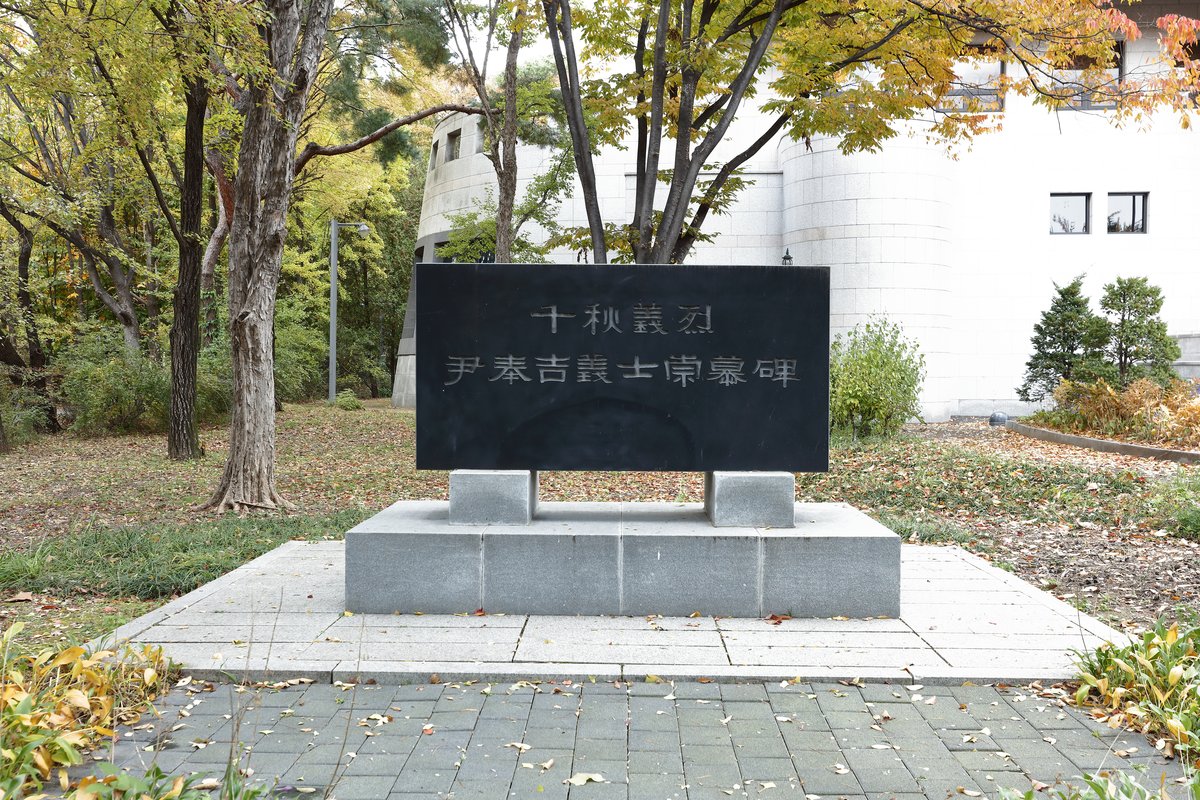
为纪念上海义举60周年,于1992年4月29日在梅轩市民之林落成,用以缅怀和弘扬尹奉吉义士崇高的爱国精神。
03
诗碑 (学行 & 丈夫出家生不还)
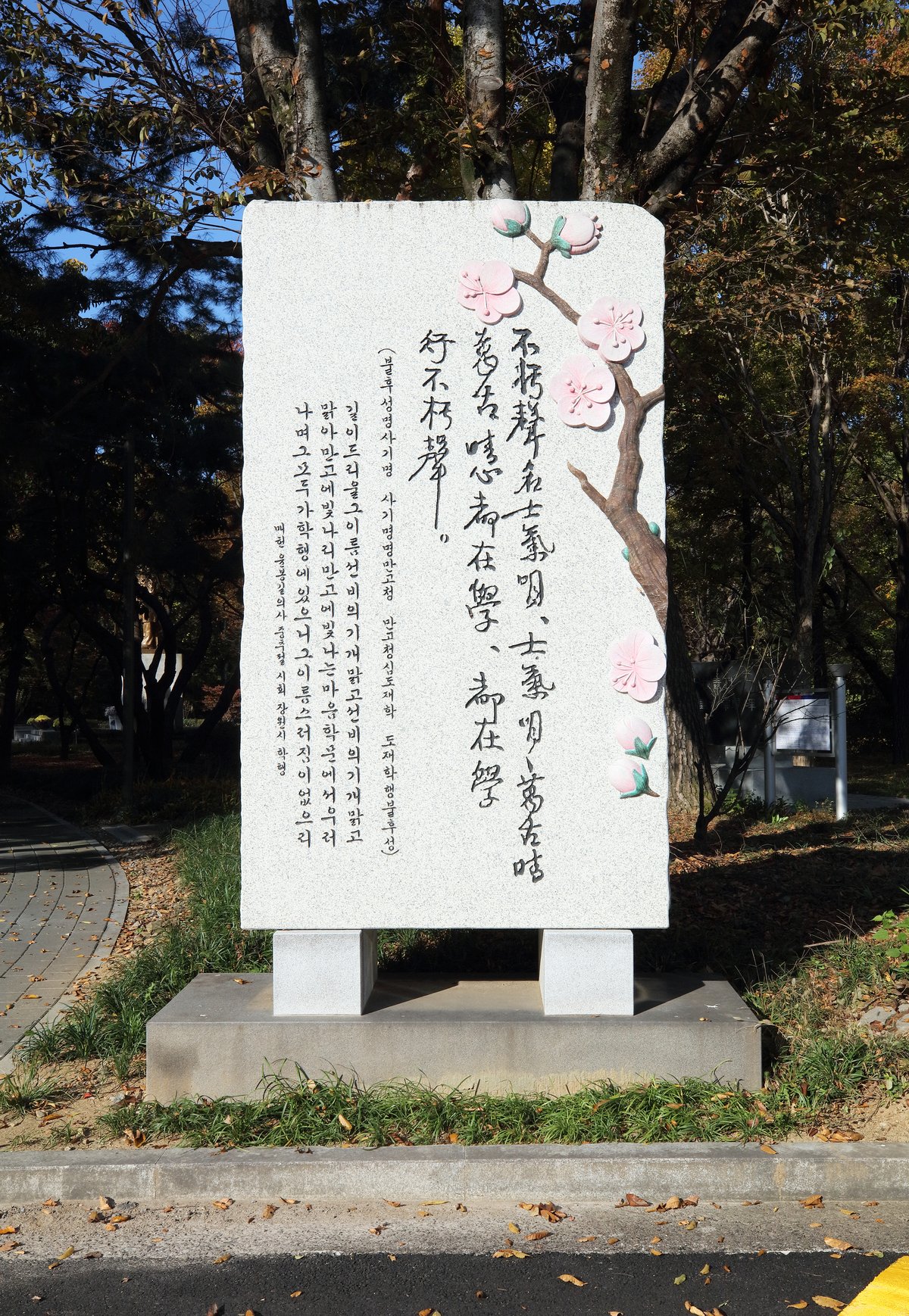
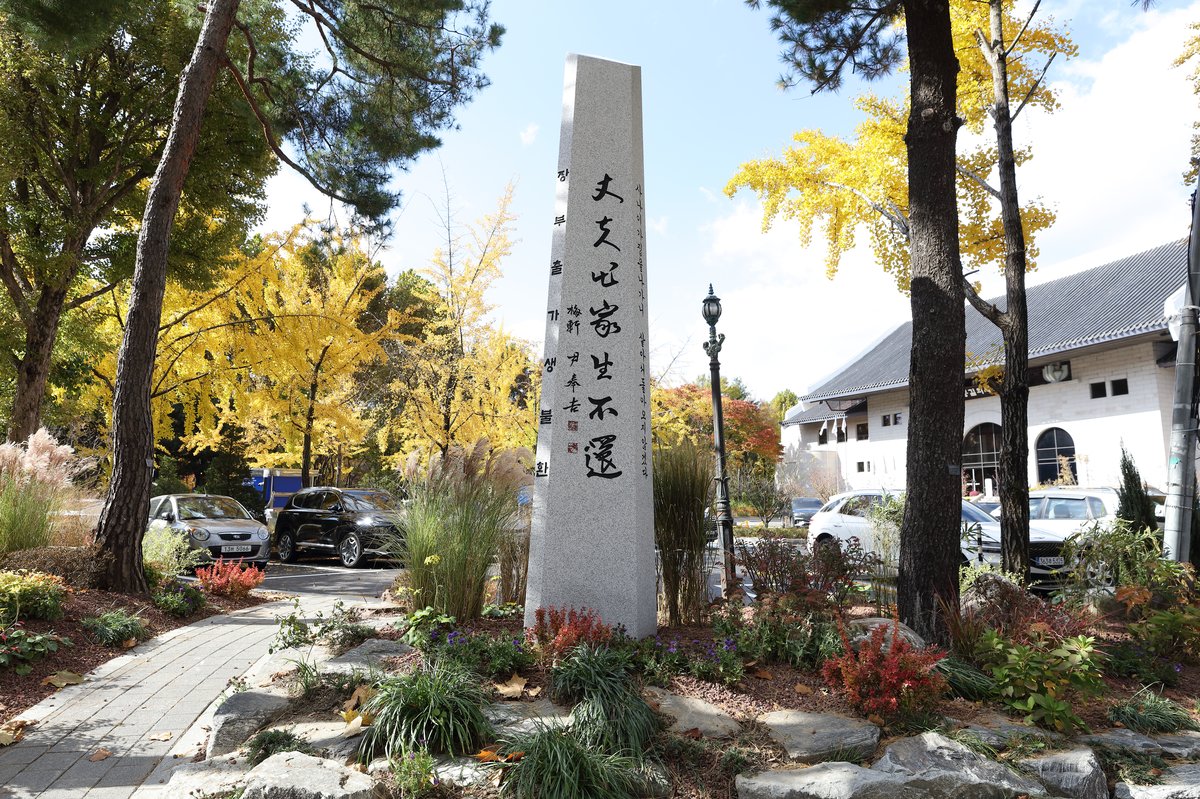
为纪念上海义举92周年于2024年落成。诗碑正面刻有尹义士十四岁时在诗歌大赛中夺魁的汉诗《学行》,背面则刻有其在流亡中国前写下的历史性誓言“丈夫出家生不还(大丈夫离家立志,不成功誓不生还)”。
Brief Biography of Maeheon Yun Bong-gil
1905
Eulsa Protectorate Treaty enforced; Korea’s diplomatic sovereignty deprived.
1907
Emperor Gojong forced to abdicate; Korean imperial army disbanded.
1908. 6. 21.
Born in Siryang-ri, Yesan-gun, Chungcheongnam-do.
Birth name: Woo-ui, Courtesy name: Yong-gi, Pen name: Maeheon, Nickname: Bong-gil.
Birth name: Woo-ui, Courtesy name: Yong-gi, Pen name: Maeheon, Nickname: Bong-gil.
1910
Gyeongsul National Humiliation (Annexation of Korea by imperial Japan).
1919
Inspired by the March First Independence Movement, withdrew from Deoksan Public School in protest against colonial education.
1921
Studied Chinese classics and poetry under scholar Seong Ju-rok at Ochiseosuk.
Married Bae Yong-sun.
Married Bae Yong-sun.
1926
Received the pen name "Maeheon" from his teacher; established a night school for the rural enlightenment movement.
1927
Compiled Nongmindokbon (Peasant Textbook) as educational materials for rural youth.
1928. 2. 5.
Established Buheungwon (Revival Center) and led the rural revival movement.
1929
Wrote the Gisa Year Diary; organized Wichingye (youth society), Suam Sports Association, and Woljinhoe (rural enlightenment group). Staged the allegorical play The Rabbit and the Fox.
1930. 3. 6.
Left the phrase "Jangbuchulga Saengbulhwan" ("Once a brave young man filled with aspirations leaves his home, he will never return until he has achieved his goals") and went into exile in China.
1931. 6. 23.
Arrived in Shanghai. Organized the Korean Workers’ Association and collaborated with Provisional Government leaders.
1932. 4. 26.
Joined the Korean Patriotic Corps.
1932. 4. 29.
Carried out the bombing uprising at Hongkou Park victory celebration. Arrested at the scene.
1932. 5. 25.
Sentenced to death by a Japanese military court.
1932. 12. 19.
Executed by firing squad at the Kanazawa Army Engineering Workshop in Japan, nobly sacrificing his life for independence.
1943
Cairo Declaration promised Korean independence, citing the Shanghai Uprising.
1946
Remains exhumed from Kanazawa, repatriated to Korea, and interred at Hyochang Park.
1962
Posthumously awarded the Order of Merit for National Foundation (Republic of Korea Medal, First Class).